Medically reviewed by Derek Wimmer, PA Updated
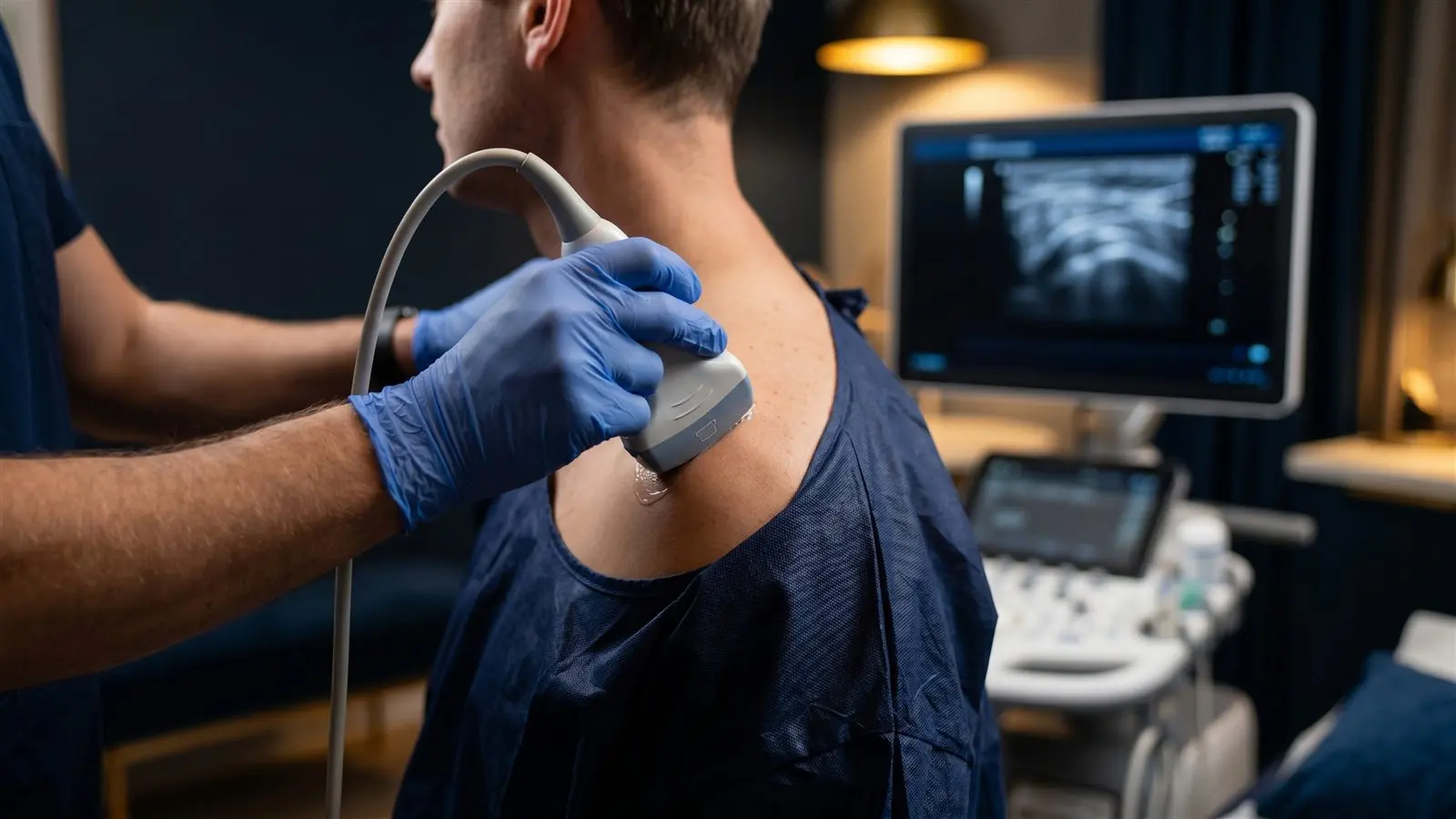
Image-guided injections use real-time ultrasound (or fluoroscopy) to visualize the target before and during an injection, so medication or biologics are delivered precisely to the right structure. This improves accuracy compared with 'blind' injections and is used for PRP, hyaluronic acid, corticosteroids, and more.
| Guidance | Ultrasound / fluoroscopy |
|---|---|
| Benefit | Precise, accurate placement |
| Used for | PRP, HA, corticosteroid, diagnostics |
| Setting | In-office |
Why image guidance matters
Many injections are performed 'blind,' relying on surface landmarks. Image guidance lets us see the joint, tendon, or nerve in real time, confirm the needle position, and deliver treatment exactly where it's intended — improving accuracy and confidence in the procedure.
What we use it for
- PRP and regenerative injections
- Hyaluronic acid (viscosupplementation)
- Corticosteroid injections
- Diagnostic and targeted joint or tendon injections
When we use it
Image guidance is a core part of how we practice — used whenever it adds precision. Not every injection requires it; some targets are straightforward. But when a joint, tendon, or nerve is best reached under imaging, we use ultrasound or fluoroscopy so you're not guessing, and neither are we.
Terms to know
- Image-guided injection
- An injection performed while the clinician uses real-time imaging to see the treatment area.
- Ultrasound
- Imaging that uses sound waves to show soft tissue and guide selected procedures.
- Fluoroscopy
- Real-time X-ray imaging used to guide selected procedures.