Medically reviewed by Derek Wimmer, PA Updated
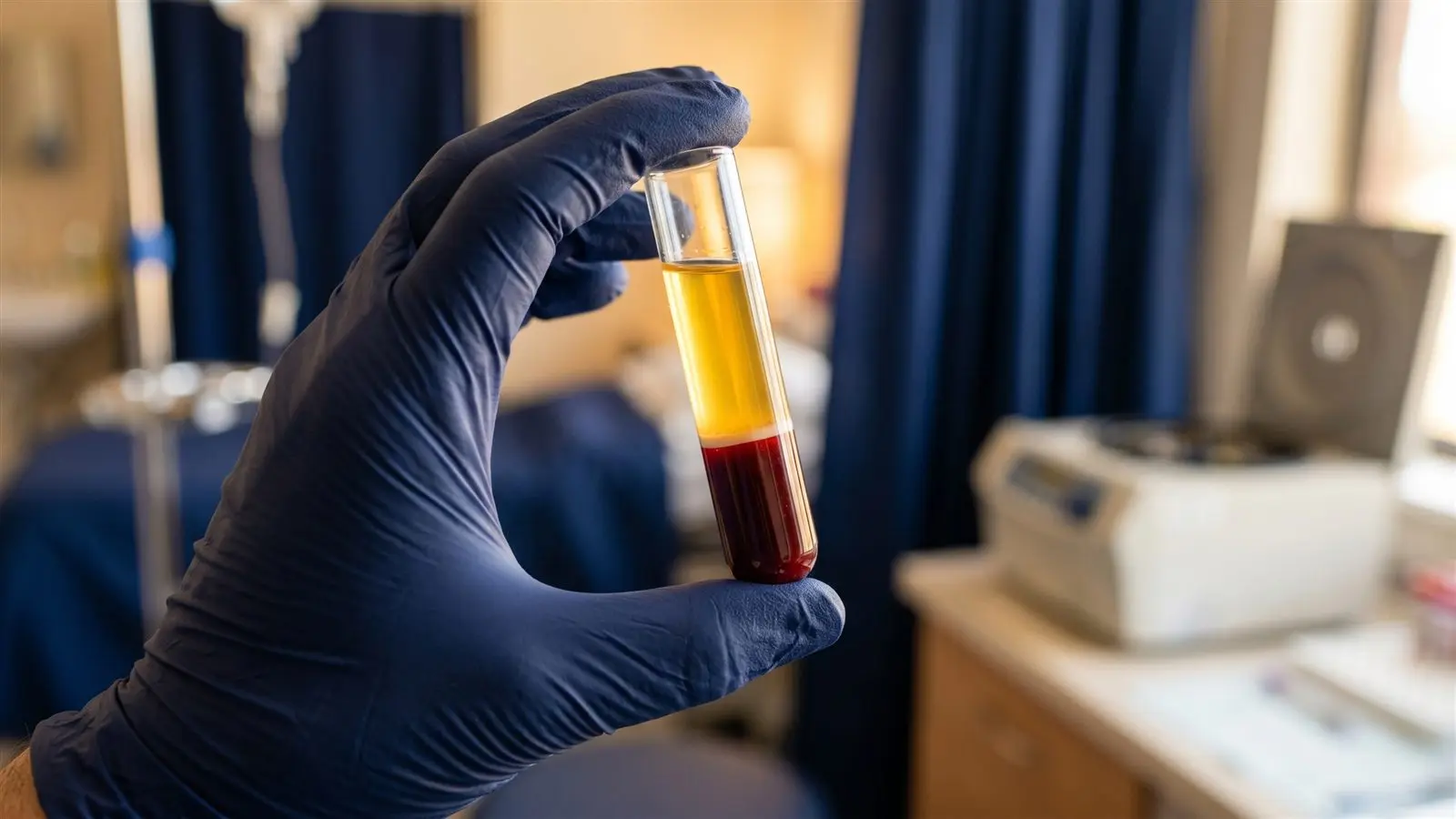
PRP (platelet-rich plasma) is made by concentrating platelets from a small sample of your own blood, then injecting them — under image guidance (ultrasound or fluoroscopy) where it adds precision — into an injured or arthritic area to support the body's natural healing signals. It is non-surgical, autologous (from your own body), and performed in-office.
| Type | Non-surgical, autologous injection |
|---|---|
| Guidance | Ultrasound or fluoroscopy, when needed |
| Common areas | Knee, shoulder, elbow, hip, tendons |
| Visit length | Typically under an hour |
| First results | Gradual, over several weeks |
What is PRP?
Platelet-rich plasma is created from a small sample of your own blood, concentrated to increase the proportion of platelets — cells rich in growth factors that play a role in natural healing. That concentrate is then injected — with image guidance, ultrasound or fluoroscopy, where it adds precision — into the area being treated.
Because PRP is derived from your own blood (autologous), it works with your body rather than introducing a foreign substance.
What PRP may help with
For selected patients, PRP is used as part of a non-surgical plan for a range of orthopedic concerns. Whether it is appropriate for you depends on your diagnosis, imaging, and goals.
- Knee osteoarthritis and joint pain
- Tendinopathy — tennis/golfer's elbow, Achilles, patellar tendon
- Rotator cuff and shoulder irritation
- Hip and other joint discomfort
- Certain soft-tissue and overuse injuries in active adults
Who is a candidate?
Good candidates are often active patients seeking alternatives to surgery, those who haven't found lasting relief from conservative measures, and people who want to support function and delay or reduce the need for more invasive intervention. PRP is not right for everyone — candidacy, evidence, and expectations are discussed honestly during your evaluation.
What the appointment is like
We begin with an in-office evaluation, with imaging when it's needed, then draw a small blood sample, prepare the concentrate, and perform the injection — image-guided when it adds precision. We develop your care plan during the same visit, and when clinically appropriate, care often begins that same day.
Realistic expectations & safety
Responses to PRP vary from person to person, and results are not guaranteed. Some patients notice gradual improvement over weeks as tissue responds. Because PRP uses your own blood, the safety profile is generally favorable, though as with any injection there are risks we will review with you.
Terms to know
- PRP
- Platelet-rich plasma, prepared from a patient's own blood to concentrate platelets for an injection.
- Image-guided injection
- An injection performed while the clinician uses real-time imaging to see the treatment area.
- Ultrasound
- Imaging that uses sound waves to show soft tissue and guide selected procedures.